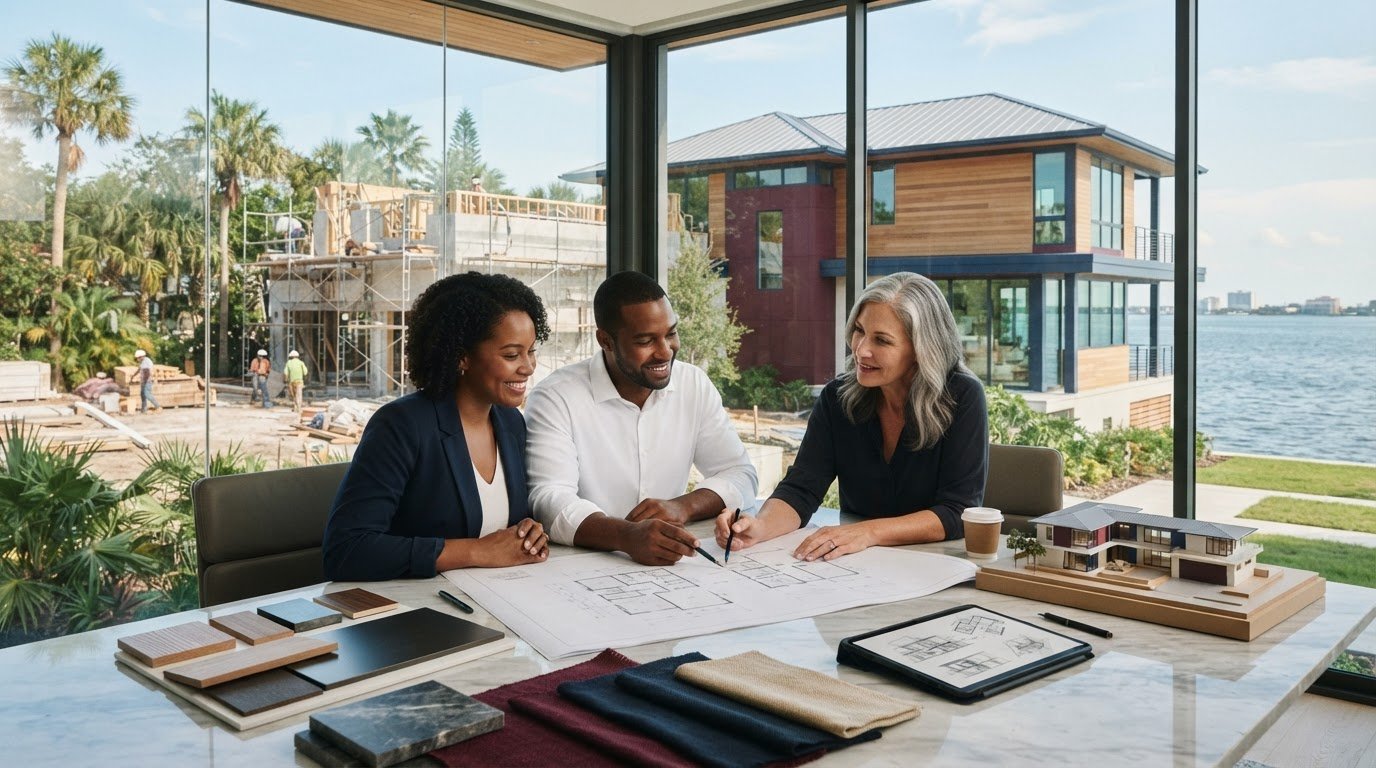
The Boutique Home Building Process: From First Conversation to Finished Home
What if the most important part of a custom home isn’t the moment construction begins, but the decisions you make together beforehand? The boutique home building process can feel uncertain when design, approvals, budgets, and construction overlap. You want a home that reflects your priorities and a clear understanding of what happens next.
That need for clarity is reasonable. A well-guided build is more than a series of construction milestones. It’s a sequence of shared decisions, each shaping the home and your experience of creating it. You should know where your input matters, how key choices are managed, and what to ask before work moves forward.
This article follows the journey from the first conversation through design, planning, approvals, construction, and move-in. You’ll learn which decisions tend to shape each phase, how to stay involved without taking on the job of managing the build, and what to ask when choosing a builder. For a boutique firm such as Maverick Design and Construction, limiting the number of projects each year is part of its approach to personalized attention. Look for that attention in the process itself: considered guidance, clear communication, and craftsmanship carried through to the finished home.
Key Takeaways
- The boutique home building process involves shared decisions from early conversations through design and construction.
- The sequence can vary with the property, design choices, and local review requirements. Clarify likely decision points early.
- Prepare by gathering site information, aligning decision-makers, and discussing how selections, allowances, changes, and responsibilities will be handled.
- Compare builders by their documented process, communication approach, project fit, craftsmanship, and local experience.
- During construction, ask how milestones, schedule changes, and open decisions will be communicated so you can stay involved without managing the work yourself.
What Makes the Boutique Home Building Process Different?
The boutique home building process is a deliberately personal way to deliver a project, not a separate construction method. The structure, materials, and trades still need careful planning and skilled work. What changes is the emphasis on a tailored working relationship: you bring the vision, while the builder helps coordinate design and construction within the agreed project scope.
A high-volume model may rely more on standardized plans and choices. A boutique approach may be better suited to a home shaped around a particular site, household, and set of priorities. It doesn’t remove the practical demands of building. Instead, it places greater emphasis on clear conversations, considered decisions, and coordination among the people responsible for the work. This is where construction management matters: schedule, cost, quality, and scope all require active oversight.
Who benefits most from a boutique home build?
This approach may suit homeowners who want to shape important details, collaborate closely, and give craftsmanship careful consideration. You’ll still need to participate. Plans, materials, finishes, and other selections require your input and timely approval. The level of involvement depends on the project and the responsibilities set out in your agreement.
Fit matters as much as the design. Consider how you prefer to communicate, how much time you can give to decisions, and whether the builder’s process suits your project’s scope. Ask how questions are handled and who coordinates decisions across design and construction. A personal approach should feel clear and accountable, not simply appealing in name.
What does boutique mean in a real project?
Maverick Design and Construction is a family-owned firm that limits the number of projects it takes on each year. The company describes this as an approach to making room for personalized attention, not a promise of a particular response time or service level. Ask how that approach works on your project: who your main contact will be, how decisions are documented, and how design questions reach the people managing construction.
Look for specifics rather than relying on the word “boutique.” Review the builder’s process, clarify responsibilities, and discuss how your priorities will guide decisions as the project develops. For more context on the boutique custom home builder approach, consider how a firm’s project volume and working style align with the experience you want.
How the Boutique Home Building Process Moves from Vision to Plans
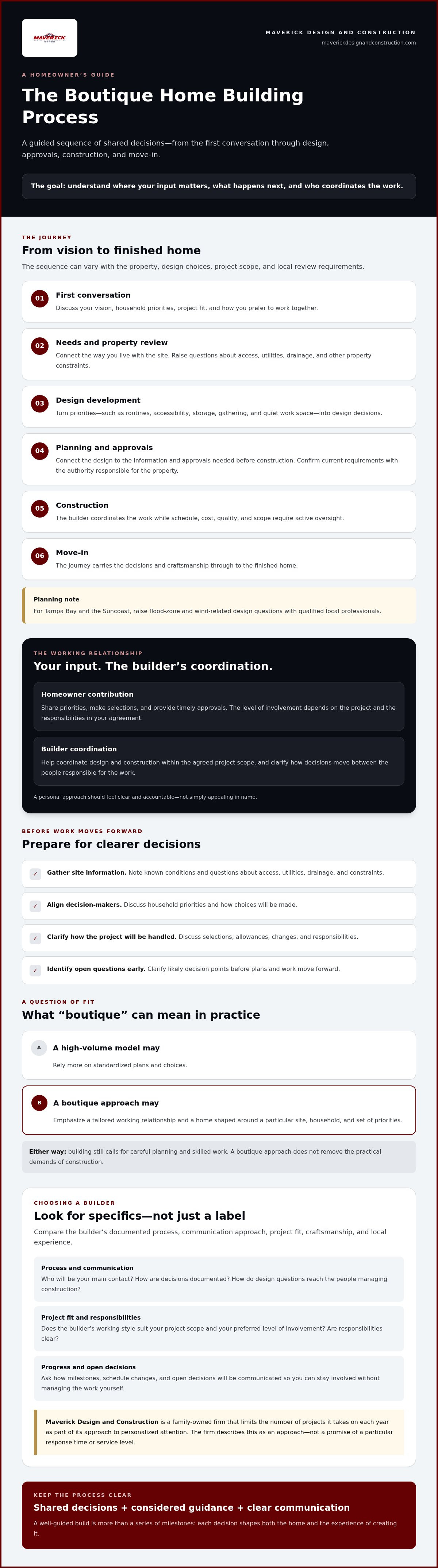
The boutique home building process typically moves from early conversations and a review of your needs and property into design development, planning and approvals, and preparation for construction. Each stage turns ideas into practical decisions. The exact workflow depends on the property, project scope, design choices, and requirements of the relevant local jurisdiction.
From lifestyle priorities to a workable design
Start with how you live, not a catalogue of finishes. Consider household routines, accessibility needs, storage, and which spaces deserve the most attention. For example, think about how your family uses the kitchen on a weekday, or where you need quiet work space and room to gather. These priorities give design conversations direction before you begin choosing materials and finishes.
As the concept develops, your design and construction team can help test those priorities against the property and project scope. Be clear about what matters most and where you’re open to alternatives. For more perspective on how design choices and craft come together, explore the luxury home design and craftsmanship guide.
Site review, approvals, and construction readiness
Before plans are finalized, investigate conditions that could shape them. Ask about site access, available utilities, drainage, and other property constraints. For properties in Tampa Bay and the Suncoast, raise questions about flood-zone status and wind-related design considerations with qualified local professionals. Confirm current permitting and code requirements with the authority responsible for the specific property, since requirements can differ between jurisdictions.
Planning connects the design to the information and approvals needed before construction can begin. It can also surface open questions while they may be easier to address on paper than after work is underway. The U.S. Bureau of Labor Statistics describes construction managers as professionals who plan, coordinate, budget, and supervise construction projects. Ask how those responsibilities are assigned on your project and who will guide decisions as plans progress.
Build-ready plans connect the design intent with the construction decisions needed to carry it into the home. Before moving toward construction, review what has been decided, what still needs approval, and how changes will be handled. If you’re comparing approaches, you can also review Maverick Design and Construction’s custom home building information as one point of reference.
What Happens During Construction, and How Is Progress Managed?
Once plans and project preparations are in place, the home takes shape through coordinated work. Crews prepare the site, build structural elements, enclose the home, install systems, and complete interior and exterior finishes. The order matters: later work often depends on earlier stages being ready and reviewed.
In a boutique home building process, personal attention should be supported by clear responsibilities, not left to informal conversations. Ask who your main contact is, who can answer construction questions, and how you’ll hear about milestones, schedule changes, or issues that need your input. Communication methods and frequency can vary by project, so agree on expectations rather than assuming a fixed update schedule.
Communication, decisions, and change management
Before work progresses, clarify how selections and decisions will be recorded and approved. If you request a change, ask how it will be documented, assessed against the agreed scope, and approved before work moves forward. A written change process helps everyone understand what was requested and what happens next. It also gives you a record to refer to if questions arise later.
Timely decisions can affect coordination. A late selection or approval may change what can be ordered, which work can proceed, or how trades are sequenced. Ask which decisions are coming up and when they’re needed, keeping in mind that timing depends on project-specific conditions.
Craftsmanship and quality checks through the build
Quality comes from the work itself and from reviewing it along the way. Ask when completed work will be ready for review, what you’ll be able to see at each stage, and how to raise questions or concerns. For example, reviewing visible work before it is covered can be a useful opportunity to discuss it while it’s accessible. Don’t assume that your review replaces a required inspection or determines who is responsible for approving the work.
Maverick Design and Construction identifies premium materials and American craftsmanship as priorities. Understand those values through the project’s plans, material choices, and agreed quality expectations, rather than treating them as a blanket promise about outcomes. Inspection requirements and responsibilities depend on project details and the relevant local authorities. Confirm who arranges required inspections, who shares the results, and how any follow-up is documented.
Good management brings progress, decisions, workmanship, and accountability into alignment. When each party understands their role and important choices are recorded, you can stay involved without being responsible for coordinating construction yourself.
How Homeowners Can Prepare for a Smoother Boutique Build
Good preparation starts before plans are finalized. In the boutique home building process, clear priorities and agreed responsibilities help keep conversations focused as the project takes shape. You don’t need to manage construction yourself, but you can be ready to share information, make decisions, and ask how the work will be coordinated.
- Define your priorities: List your must-haves, preferred finishes, and areas where you’re comfortable considering alternatives.
- Gather property information: Collect available records and reports, then ask what else may be needed for your site.
- Align decision-makers: Ask everyone who will approve plans or selections to agree on priorities before key choices arise.
- Set communication preferences: Discuss how you’d like questions, decisions, and updates shared, and how approvals will be documented.
- Clarify project terms: Review allowances, selection deadlines, change approvals, and each party’s responsibilities before making commitments.
Questions to ask before choosing a builder
Ask how the builder manages project commitments and keeps communication organized across active builds. Find out how design decisions, selections, changes, and approvals are recorded, and who your main contact will be. Clarify which services are included in the proposed agreement and which may require separate professionals or arrangements. Specific answers make it easier to compare working styles and understand what you’re agreeing to.
Decisions to organize before construction begins
Bring together the documents you have, such as property records and existing reports, without assuming they’re sufficient. Ask what else may be needed. If your property is in Tampa, St. Petersburg, Sarasota, or a nearby community, ask which local reviews or site investigations may apply to that location. Confirm responsibilities and next steps with the builder and appropriate local professionals.
Sort your design preferences into three categories: essential, preferred, and flexible. That distinction can guide conversations if a choice needs to be reconsidered. Give every household decision-maker a chance to weigh in early, so selections reflect shared priorities rather than last-minute differences. Keep questions in one place, and ask when each decision is needed, who approves it, and how the answer will be documented.
A prepared homeowner brings clarity, not a finished specification. If you’re ready to discuss your priorities and project responsibilities, explore custom home building with Maverick Design and Construction.
Choosing a Boutique Home Builder for Your Tampa Bay Project
The right builder is not simply the one with the most polished portfolio. Look for a working process that fits your priorities and makes responsibilities clear. In the boutique home building process, a personal approach should show in how the firm handles decisions, coordination, and accountability, not just in how it describes its quality.
How to assess process, fit, and accountability
Compare builders across practical areas: communication, project fit, craftsmanship, coordination, and local experience. Ask how the team guides homeowners through design choices and project changes. Request relevant examples, then confirm what work the firm completed and whether the property type and municipality are comparable to yours.
Look for detail behind broad claims. How are roles divided between the builder, design professionals, and homeowner? Who oversees construction coordination? How are decisions and changes documented? Clear answers help you understand the working relationship before you commit. If an answer is vague, ask for a sample process or a specific example rather than relying on general assurances.
- Communication: Who is your main contact, and how are questions and decisions shared?
- Project fit: Has the builder handled a project with a similar scope or property context?
- Craftsmanship: How does the firm describe its material and workmanship standards, and how can you assess them?
- Coordination: Who manages the connection between design decisions and construction work?
- Local experience: What relevant project experience does the builder have in your municipality, and how can it be verified?
Compare written processes and responsibilities, not just finished-home photographs. A portfolio may show the result; a documented process gives you a better sense of how the builder will work with you along the way.
When a conversation with Maverick may be the right next step
Maverick Design and Construction is a family-owned boutique builder focused on custom home building and high-end residential renovations. The firm limits its annual project volume as an approach to supporting personalized attention. That doesn’t guarantee a particular level of service, so discuss your project scope, communication preferences, and expectations directly. Maverick serves Tampa, St. Petersburg, Sarasota, and surrounding Suncoast communities. Confirm current service coverage and project availability for your plans.
If the firm’s approach and your priorities appear aligned, discuss your custom home vision with Maverick.
Take the Next Step Toward a Home That Fits
A successful custom build depends on more than the finished plans. It also relies on clear priorities, timely decisions, and an understanding of how design choices connect to construction. The boutique home building process is easier to approach when you know what to expect, prepare your questions, and choose a builder whose communication and responsibilities are clear.
Maverick Design and Construction is a family-owned boutique firm serving Tampa, St. Petersburg, Sarasota, and surrounding communities. The firm limits the number of projects it undertakes each year as an approach to supporting personalized attention. Discuss how that approach, the project scope, and your priorities might align before deciding whether it’s the right fit.
Discuss your custom home vision with Maverick and start the conversation with your goals, questions, and ideas. A thoughtful first step can set the tone for the work ahead, from early planning to the place you’ll call home.
Frequently Asked Questions
What are the main steps in a boutique home building process?
The main steps typically move from early conversations and property review into design, planning, approvals, and construction. You and the builder clarify priorities, develop plans, make selections, and coordinate decisions as the project advances. The sequence depends on your property, project scope, design choices, and local requirements. Before work begins, ask for an explanation of the stages, who is responsible for each, and how your decisions will be recorded.
How is a boutique home builder different from a larger builder?
A boutique builder typically takes on fewer projects, which may support a more personal working relationship. That distinction alone doesn’t guarantee a particular communication schedule or result. Ask how the firm manages project capacity, who your main contact will be, how selections and approvals are documented, and how progress is shared. Compare each builder’s actual process and responsibilities rather than relying on labels or broad claims about service and quality.
How long does the boutique home building process take?
There isn’t one reliable timeline for every custom home. Design complexity, property conditions, local approvals, material selections, weather, and construction scope can all affect timing. Ask the builder for a schedule based on your project and identify which milestones depend on your decisions or external reviews. Treat early estimates as subject to refinement, and clarify how schedule changes will be communicated as work progresses in Tampa, St. Petersburg, Sarasota, or elsewhere.
What should I prepare before meeting a custom home builder?
Bring your broad goals, preferred location or property information, household priorities, and examples of spaces or details you value. Identify everyone who will help make decisions, and consider how you prefer to communicate. You don’t need to choose every finish before the first conversation. Use the meeting to discuss project fit, what information is still needed, how responsibilities are divided, and which decisions are likely to come next.
Do I need to own land before starting the home building process?
No, you don’t always need to own land before an initial conversation, but identifying a property can help clarify site-specific possibilities and constraints. If you’re still looking, discuss what property characteristics may suit your goals and what to investigate before committing. For a Tampa Bay or Suncoast parcel, ask qualified local professionals about zoning, flood-related information, utilities, access, and permitting considerations that may apply to that specific location.
What decisions will I need to make during a custom home build?
You’ll typically help shape the layout, materials, finishes, fixtures, and other priorities, depending on the design and project agreement. Ask when selections are needed, what options are available, who approves them, and how approvals are recorded. Discuss how requested changes may affect scope or sequencing before authorizing them. Aligning household decision-makers early can help the team receive clear direction and coordinate the work with fewer conflicting instructions.
How do I choose the right boutique home builder in Tampa Bay?
Choose by comparing documented processes, relevant experience, and project fit, not just photographs or broad promises. Ask how the builder manages communication, project capacity, design decisions, construction oversight, and changes. Discuss experience with your property type and municipality, and clarify which professionals or approvals may be involved. Maverick Design and Construction is family-owned and serves Tampa, St. Petersburg, Sarasota, and surrounding communities. Confirm current coverage and project availability for your plans.