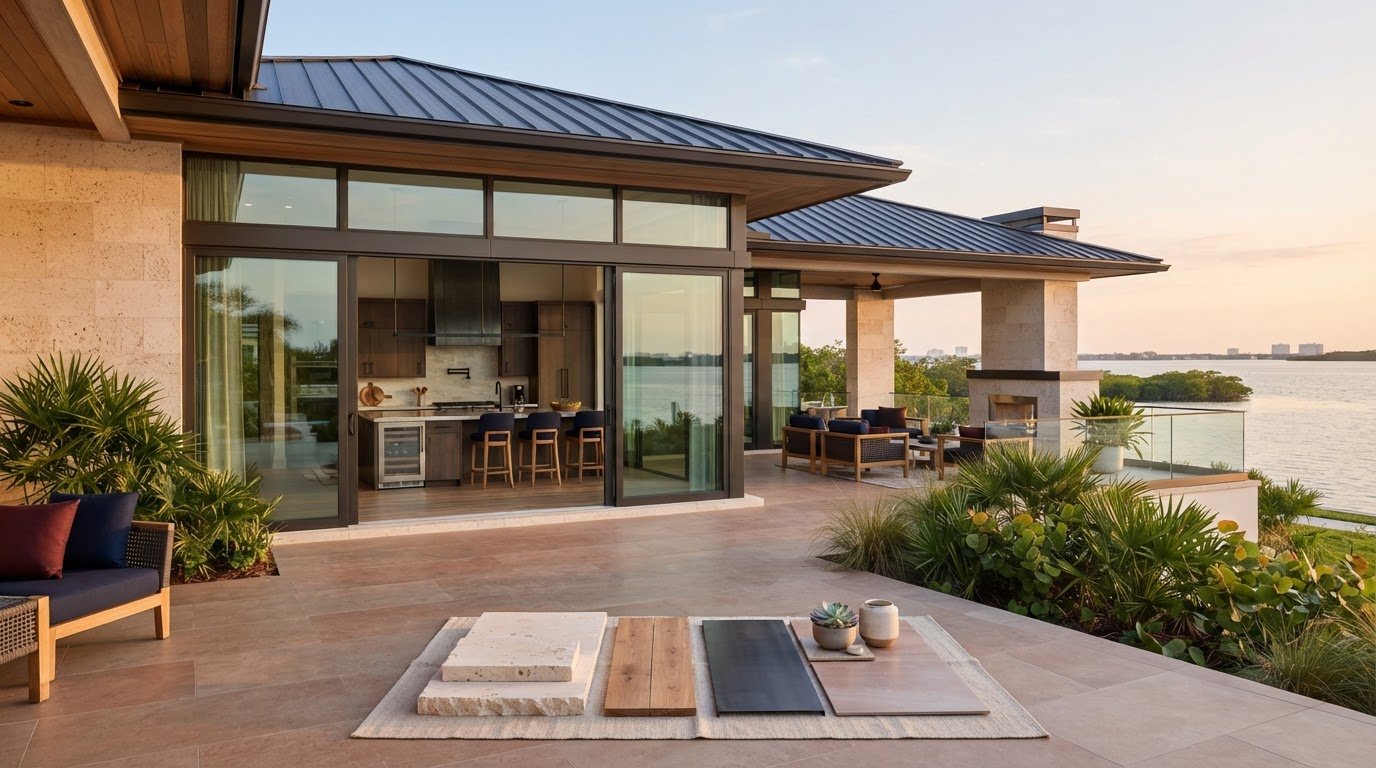
Premium Home Build Materials: Florida Homeowner's Guide
In Tampa Bay, a material’s real luxury is how well it holds up. The right premium materials for home builds should bring beauty to your rooms while standing up to humidity, intense sun, heavy rain, and, in some locations, coastal exposure. A striking finish can still disappoint if its upkeep or expected performance doesn’t suit your home and lifestyle.
You’re right to look beyond appearance. A considered material choice balances durability, maintenance, design, and how each element will be installed. That takes early coordination, too, so selections work with the home’s construction plan and create a cohesive finish rather than a collection of costly details.
This guide will help you compare options by more than color or texture, consider how location and daily use affect your choices, and weigh the care materials may require over time. You’ll also learn what to confirm about product performance, maintenance guidance, and availability before decisions are finalized. With thoughtful planning, you can create a home that feels refined, functions beautifully, and is made for its place in Florida.
Key Takeaways
- Judge premium materials for home builds by fit, documented performance, workmanship, and long-term care, not appearance or prestige alone.
- Match material choices to each part of the home, its exposure, and how your household uses the space.
- Compare upkeep, repairability, finish, and manufacturer guidance before settling on a material.
- Use a clear selection process, from site conditions and household priorities to samples and written specifications.
- Coordinate design and construction decisions early, and review specifications, substitutions, and maintenance expectations with care.
What Makes Premium Materials Worth Considering in a Florida Home Build?
A premium building material is one that suits its location and purpose, offers verifiable performance, and can be installed and maintained to deliver a lasting, well-finished result. Price and prestige may shape a selection, but neither proves that a product belongs in a particular room or will meet your expectations over time.
That distinction matters in a custom home. Stone, wood, glass, metal, and composite products each bring different qualities; the broad list of building materials offers a useful starting point for understanding the range. The more important question is how a specific product’s finish, care needs, consistency, and documented performance fit your project. A material with a respected reputation may still be unsuitable for a damp area, a sun-exposed wall, or a household that prefers minimal upkeep.
Material quality is only part of the finished result. Preparation, precise installation, and well-planned transitions influence how materials meet and function together. Even a carefully selected product can disappoint if it isn’t installed according to its requirements. Read the product documentation, clarify the specified application, and coordinate details with the design and construction plan.
What does “premium material” mean in a custom home?
Look for consistent quality, a finish suited to the design, care requirements you’re willing to follow, and documentation that supports the intended use. Ask what routine cleaning involves, whether the finish needs periodic attention, and how damage might be repaired. These practical details help you compare options without relying on brand status or a blanket claim that one material is the best.
Why does Tampa Bay’s climate matter when selecting materials?
Heat, humidity, rainfall, strong ultraviolet exposure, and coastal conditions can all inform material and finish specifications. Their effects aren’t identical at every property: a product’s exposure can vary with the home’s orientation, enclosure, and distance from the coast. Consider where a material will be used, not just the region where the home is being built.
For each application, confirm current local requirements with the appropriate project professionals and review the manufacturer’s instructions. Check that performance information and maintenance guidance apply to the exact product and use being considered. In Tampa Bay, thoughtful specification starts with the site, the room, and the way you plan to live in the home. That’s how premium materials for home builds can serve both the design and the demands of daily life.
Which Premium Materials Suit Different Parts of a Florida Home?
A material is suited to a home when its qualities match the exact place and purpose it will serve. A finish that works beautifully in a protected interior may need different care or perform differently on a sun-exposed exterior. Treat the examples below as categories to compare, not as guaranteed fits or confirmed product selections.
How should you assess exterior materials in coastal Florida?
Think of roofing, cladding, windows, and exterior finishes as coordinated parts of the building envelope. Their ability to work together depends on the property’s exposure, the specified products, and installation details, including how components connect and manage water. A material name alone can’t establish suitability.
Before specifying exterior products, confirm the current impact, wind, moisture, and code requirements for the project’s jurisdiction. Check product documentation for the intended application, and follow manufacturer instructions for installation and maintenance. The National Association of Home Builders (NAHB) is a useful starting point for broader construction resources, but project-specific requirements and product guidance should be verified directly.
Which interior finishes balance refinement and everyday use?
Choose interior finishes around the way each room is used. Porcelain tile may suit areas where easy cleaning matters; natural stone offers distinctive variation but may require specific care. Hardwood brings warmth, while engineered flooring has a different construction and care profile. For each, review moisture guidance, cleaning needs, finish durability, and how a damaged area could be repaired or replaced.
Countertops and cabinetry deserve the same practical scrutiny. Compare surface options for stain response, moisture exposure, repairability, and finish upkeep. In kitchens and bathrooms, water and routine cleaning make manufacturer-approved use especially important. Confirm that a countertop, cabinet finish, or flooring product is intended for the location rather than assuming a premium label makes it suitable.
- Exterior envelope: Verify product and installation requirements for the site and exposure.
- Flooring: Compare appearance with care, moisture guidance, and repair options.
- Countertops and cabinetry: Assess stain and moisture considerations alongside finish and upkeep.
- Wet areas: Confirm that each specified material is approved for its intended use.
Early coordination helps keep these choices coherent, from exterior details to interior finishes. If you’re planning a custom home, kitchen, or bathroom project, you can learn about custom building and remodeling while considering how material decisions fit the overall design and construction plan.
How Can You Compare Premium Materials Beyond Their First Impression?
A polished sample can catch your eye. The better test is whether the material still suits your routines, exposure, and care preferences after installation. Appearance is the first impression; performance over a material’s service life is what makes the choice worthwhile. Premium materials for home builds aren’t automatically maintenance-free, indestructible, or right for every household.
A higher-grade finish can offer practical value through its suitability for a demanding application, consistent appearance, or repair options that fit your plans. But those benefits depend on the specific product and how it’s used and installed. Compare the details before approving a selection.
What should you compare before approving a material?
Start with the intended application and conditions. Then review samples alongside product documentation, care instructions, and warranty terms. Ask the relevant supplier or manufacturer what the documents cover, and whether the specified installation affects the guidance. Record the exact product and finish in the project specifications, along with how proposed substitutions must be reviewed and approved before procurement or installation.
| Application | Appearance | Upkeep | Repairability | Exposure | What to verify |
|---|---|---|---|---|---|
| Flooring | Pattern, texture, sheen | Cleaning and care routine | How a damaged area can be addressed | Foot traffic, sunlight, moisture | Intended use and care instructions |
| Countertops | Color and surface variation | Cleaning and any specified treatment | Repair guidance for chips or marks | Water, spills, daily use | Product documentation and warranty terms |
| Exterior finish | Color and texture consistency | Cleaning and maintenance needs | Repair method and finish matching | Sun, rain, wind, coastal conditions | Application, installation, and local requirements |
How do durability and maintenance differ across materials?
Durability isn’t a promise attached to a material category. It depends on the exact product, installation, location, exposure, and ongoing care. A surface may tolerate ordinary cleaning but still require a specific cleaner or periodic treatment. Another may be straightforward to maintain yet more difficult to repair invisibly if damaged.
Match those trade-offs to your household. Consider whether you’re comfortable following a care routine, how visible wear might be, and whether you’d prefer a repairable finish over one that needs replacement when damaged. Don’t assume “premium” means no maintenance. Look for precise, product-specific manufacturer guidance.
If a comparison includes lifespan, savings, or return-on-investment figures, ask for a named, relevant source and confirm that its assumptions apply to the product and project. Without that evidence, compare documented features and care requirements instead. A clear specification, consistent sample, and approved substitution process make the decision more grounded.
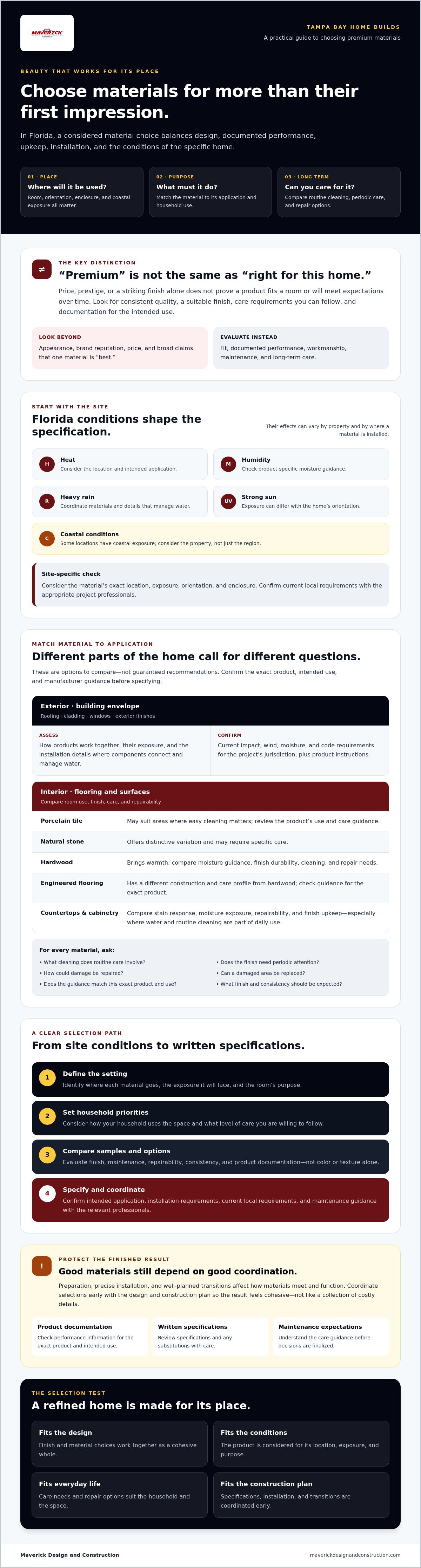
How Do You Choose and Specify Materials for a Tampa Bay Build?
Good material decisions begin before ordering. Early coordination gives the design, product requirements, availability, and construction sequence room to align. Use this process to narrow choices deliberately, then document what the project team has approved.
What steps help narrow down material choices?
Start with household priorities, then test each option against the home’s conditions and design. Reviewing the luxury home design and craftsmanship guide can help frame how material choices contribute to a cohesive whole.
1. Rank your priorities. Decide how visual character, daily use, maintenance, and site exposure should shape selections. A busy family room may call for different care considerations than a formal space; a sunlit room may show a finish differently from a shaded one.
2. Assess the site and project scope. Consider orientation, exposure, room function, and how the selected materials will connect with adjacent finishes. Confirm which local authority applies and check current jurisdictional requirements for the project. Rules and permit requirements can vary, so verify them rather than relying on a general assumption.
3. Review physical samples. See samples in the home’s natural and planned lighting, next to flooring, cabinetry, countertops, and other nearby finishes. A finish can shift in appearance under different light. This is the moment to check color, texture, scale, and consistency.
4. Confirm the details before sign-off. Review product specifications, intended application, manufacturer care instructions, warranty terms, availability, and lead times with the relevant supplier or manufacturer. Identify acceptable alternatives before a selection is finalized. For broader build-planning context, see this custom home builder Tampa guide.
What should your written material schedule include?
A clear schedule turns a design choice into an instruction the project team can follow. Record the manufacturer and product identification, finish, dimensions, intended application, and installation requirements. Attach or identify the approved sample and include relevant care documentation. Specify which alternatives are acceptable, and who must review substitutions before ordering or installation.
Keep the schedule aligned with current project plans and verified jurisdictional requirements. Review it early enough for selections to inform procurement and construction sequencing, then revisit it if plans or product availability change. Careful documentation supports coordination; it doesn’t replace checking product instructions or applicable requirements.
If you’re planning a custom home, discuss your material priorities for a custom build as part of early design and construction planning.
How Can a Boutique Builder Bring Premium Material Choices Together?
Premium materials for home builds work best when design intent, product requirements, and construction details are considered together. A finish can look right in a sample yet require specific installation conditions or affect how it meets an adjacent surface. Early coordination helps the project team identify those connections before selections are finalized.
Why coordinate the designer, builder, and material decisions?
Design choices shape more than appearance. They can influence dimensions, transitions, installation details, and the sequence in which materials are needed. A builder can help coordinate selected products with the construction plan and procurement process, while craftsmanship brings care to how those details are executed. Neither coordination nor workmanship guarantees a product’s performance, so specifications and manufacturer guidance still matter.
Keep approved selections clear and documented. Identify products and finishes, note relevant installation requirements, and define how substitutions should be reviewed. This gives the homeowner and project team a shared reference when confirming what is being ordered and installed. Availability and timing can change, so verify them with the relevant supplier rather than assuming a selection will remain available.
When should you speak with a custom builder about materials?
Start the conversation while scope and design decisions are taking shape, before selections are locked in. Bring site information, inspiration images, household priorities, and questions about care, sourcing, and product documentation. If a kitchen is part of the project, this luxury kitchen remodeling Sarasota guide offers related context.
Homeowners remain central to the decisions. Review samples in context, read specifications and maintenance instructions, and ask what a proposed substitution changes. Clarify the intended use of each material and the upkeep it may require. These conversations help keep the final selections aligned with your priorities without treating appearance, availability, or performance as a given.
Maverick Design and Construction is a family-owned boutique firm serving Tampa Bay, including Tampa, St. Petersburg, Sarasota, and surrounding communities. Its confirmed work includes custom home building and high-end residential renovations. The firm limits its annual project volume to support personalized attention. That approach can make early, direct discussion relevant as you consider how design and material decisions fit your project, without promising a particular outcome.
If you’re weighing a custom home or residential renovation, Discuss your custom home or renovation with Maverick and explore whether the firm’s services fit your plans.
Make Your Material Choices With Confidence
The strongest material plan balances appearance with the realities of each space. Compare products by intended use, exposure, maintenance, and documented guidance, then record approved selections clearly. In Tampa Bay, thoughtful coordination between design decisions and construction details helps bring the home’s finishes together with purpose.
Choosing premium materials for home builds isn’t about selecting the most prestigious option. It’s about finding materials that suit your home, your routines, and the care you’re prepared to provide.
Maverick Design and Construction is a family-owned boutique firm serving Tampa Bay with custom home builds and high-end residential renovations. The company limits its annual project volume to support personalized attention. If you’re beginning to plan a project, discuss your custom home or renovation with Maverick and explore whether its services fit your goals. With clear priorities and considered choices, you can shape a home that feels distinctly yours and is thoughtfully planned for the years ahead.
Frequently Asked Questions
What are premium materials for a home build?
Premium materials for home builds are products chosen for their suitability, finish quality, documented performance, and care requirements, not simply their price or brand reputation. A material should suit its intended application, the home’s conditions, and the homeowner’s maintenance preferences. For example, a flooring choice should be assessed for room use, cleaning needs, and manufacturer guidance, while an exterior product should be checked for its specified exposure and installation requirements.
Which materials are best for homes in Florida?
There’s no single material that’s best for every Florida home. The right choices depend on the property, room, exposure, and how you plan to care for them. In Tampa, St. Petersburg, and Sarasota, consider heat, humidity, rainfall, ultraviolet exposure, and, where relevant, coastal conditions. Compare flooring, exterior finishes, windows, countertops, and cabinetry by intended use, documentation, and maintenance guidance, then confirm applicable local requirements for the project.
Are premium materials worth it for a custom home?
They can be worthwhile when their practical qualities align with your design and household needs. A well-chosen finish may offer the appearance you want, documented suitability for its application, or care requirements you’re comfortable maintaining. Premium doesn’t automatically mean maintenance-free or more durable in every setting. Compare product documentation, installation needs, repair options, and upkeep. Avoid relying on assumed savings or lifespan claims unless the figures are supported by relevant evidence.
How do I choose materials for a coastal Florida home?
Start with the property’s specific exposure, since coastal conditions vary by location, orientation, and how much a surface is protected. Identify where each material will be used, then verify product performance information, installation requirements, care instructions, and warranty terms with the manufacturer or supplier. Confirm current local requirements with the applicable jurisdiction. For homes in the Tampa Bay area, site-specific review is more useful than assuming every coastal property faces the same conditions.
Is natural stone better than porcelain tile?
Neither is universally better; the right choice depends on the room, the look you prefer, and the care you’re willing to provide. Natural stone offers distinct natural variation, while porcelain tile can provide a more consistent manufactured appearance. Compare each specific product’s intended use, cleaning guidance, moisture suitability, and repair considerations. Check manufacturer instructions before choosing for a kitchen, bathroom, or other area where water and frequent cleaning are part of daily use.
When should I select materials during a custom home build?
Begin material discussions while the scope and design are taking shape, before selections are finalized. Early decisions give the project team time to coordinate finishes with plans, installation details, procurement, and construction sequencing. Review samples in the home’s lighting and alongside adjacent finishes. Before sign-off, confirm product specifications, availability, lead times, care instructions, and approved alternatives with the relevant supplier or manufacturer. Revisit selections if plans or product details change.
What should a material specification include?
A useful material specification identifies the manufacturer, exact product, finish, dimensions, intended application, and installation requirements. Include relevant product documentation, care instructions, and warranty information, and record the approved sample when applicable. State which alternatives are acceptable and who must review substitutions before ordering or installation. Check that the schedule matches current project plans and verified local requirements. Clear records help the homeowner and project team work from the same selection details.